Living reefs, a wreck and the instructor always beside you
A National Park underwater
What is down there
Los Roques is a marine national park and you notice it the moment your head goes under: living corals, sea fans moving with the current, shoal after shoal and a wreck you can swim into. The water is clear almost all year and most sites are shallow, so it works equally for someone who has never dived and for someone arriving with their certification card.
Every dive is guided at all times by a certified instructor, with a safety briefing beforehand and all the technical equipment provided. The site is chosen on the day according to sea and wind.
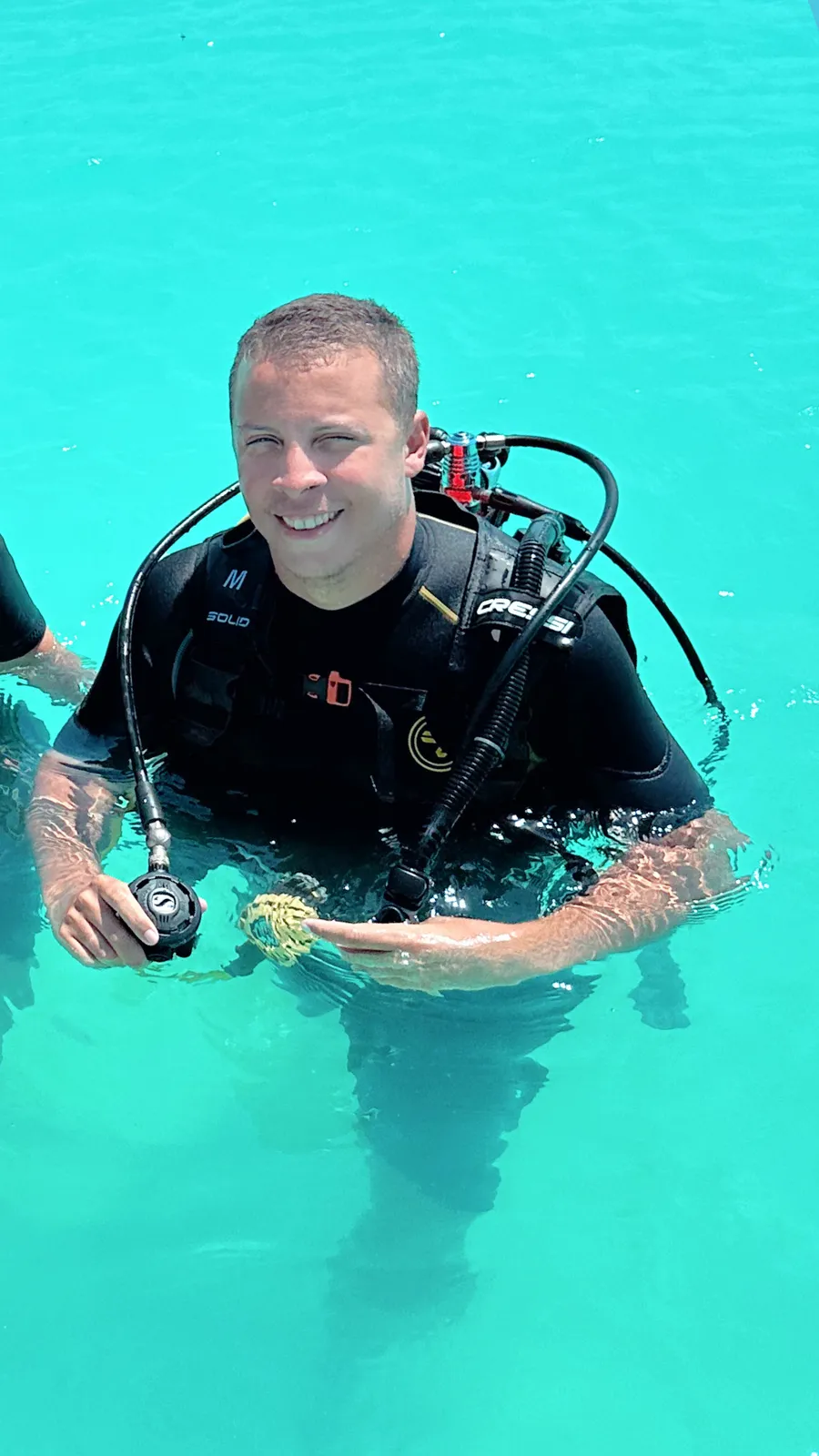
It starts at the shore, standing waist-deep. The instructor fits your BCD, explains how to breathe through the regulator, how to equalise your ears and the four hand signals you will use down there. No test, no rush: when you are comfortable, we go down.
All technical gear included
2Discover scuba
Your first time, no certification
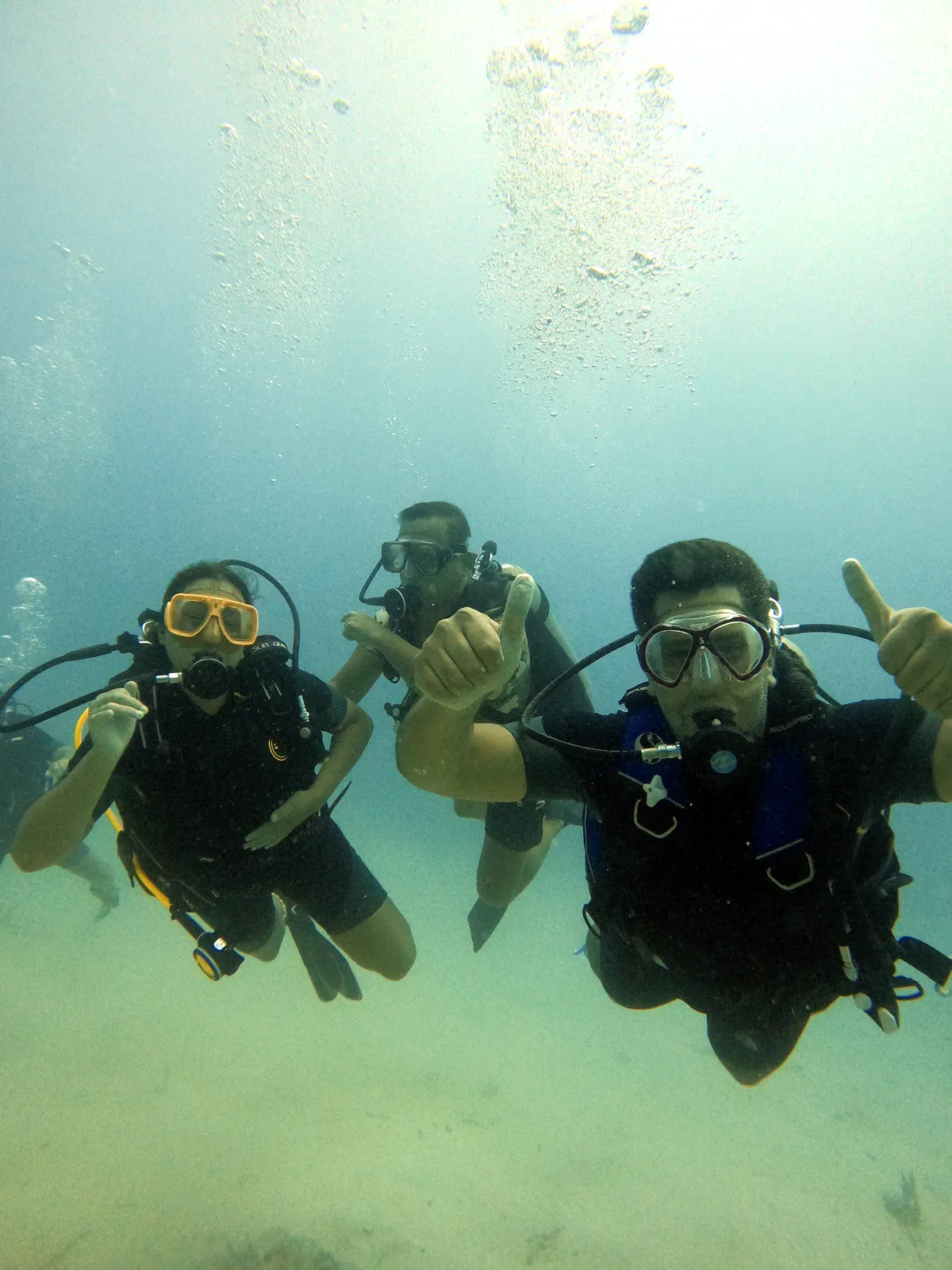
This is for anyone who has never dived. Between 45 and 60 minutes, in groups of two to four, from age 12, with the instructor literally beside you. We go slowly, shallow, and the dive video is included so you can take home the face you made.
From age 12 · 2 to 4 people · video included
3The reef
Corals and sea fans
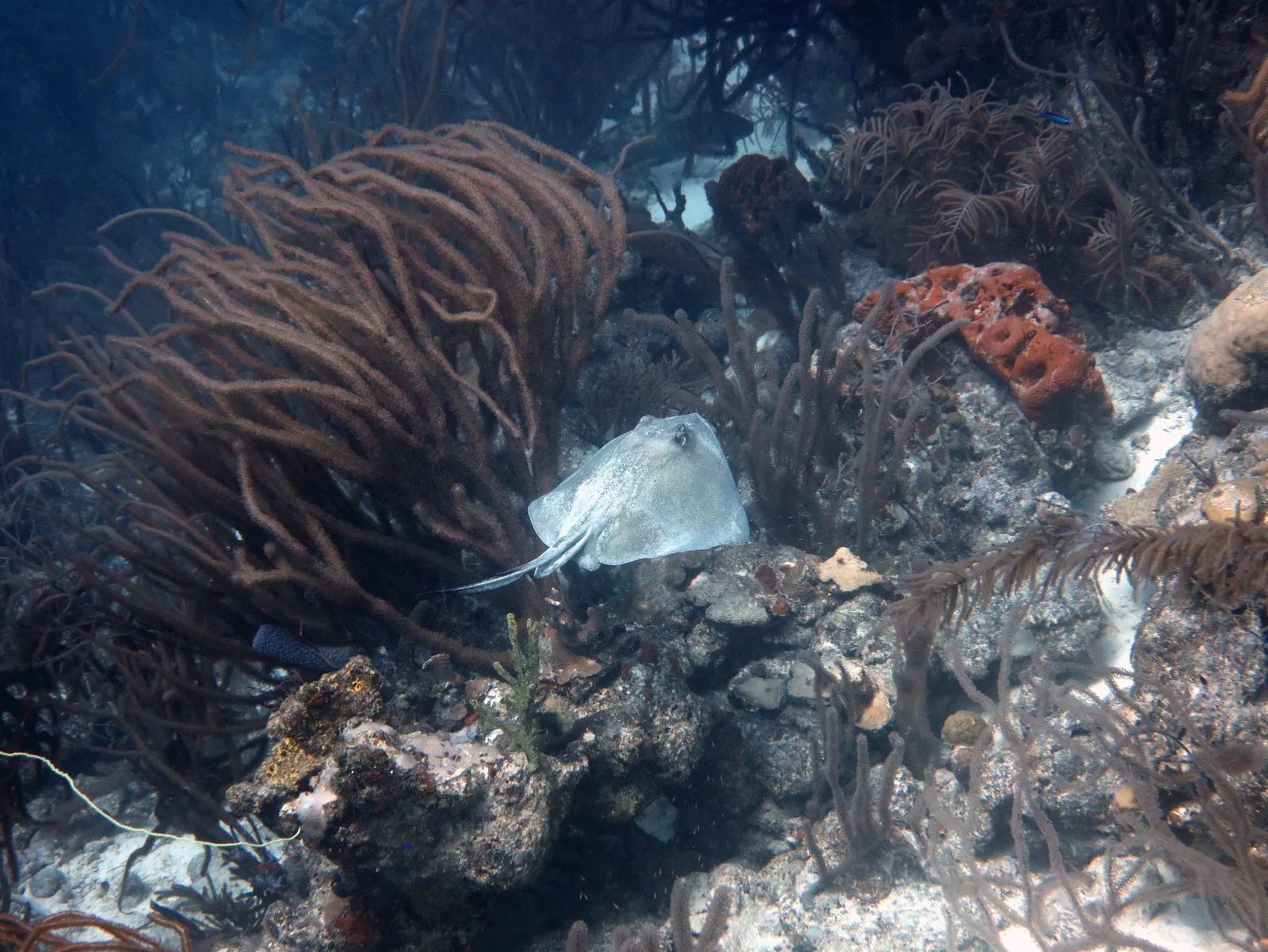
The Los Roques reef is alive and protected: sea fans opening with the current, hard corals forming walls and sandy clearings in between where rays settle. Nothing is touched and nothing is taken: it is a national park, and that is why it still looks like this.
No touching, nothing taken
4The marine life
Who lives here
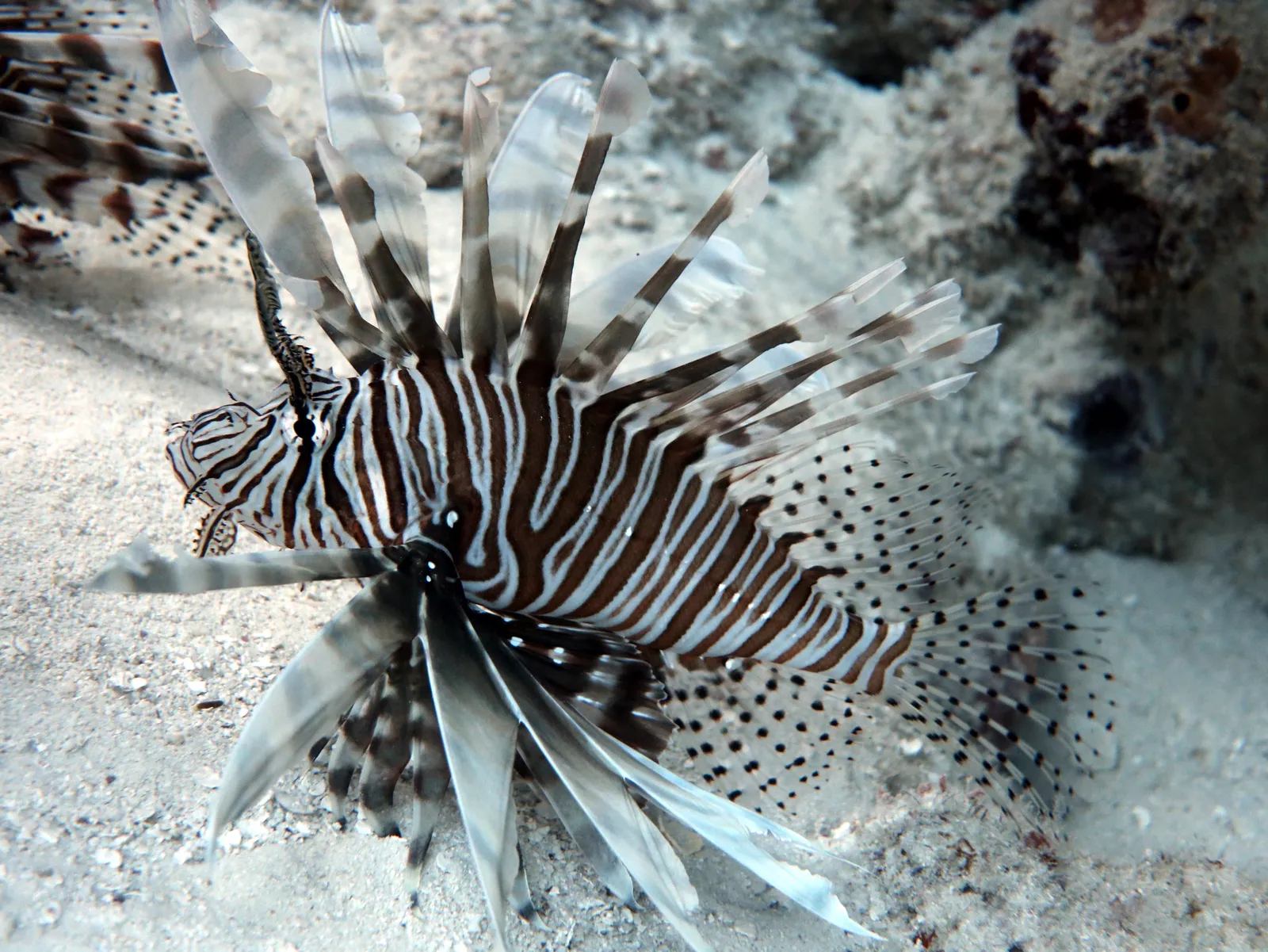
Pufferfish, porcupinefish, lionfish, shoals of grunts, lobsters tucked into caves, moray eels and, with luck, turtles and rays. The instructor points things out: half of what is there is camouflaged and without someone showing you, you swim right past.
Photos and video of the dive
5The wreck
A ship on the bottom
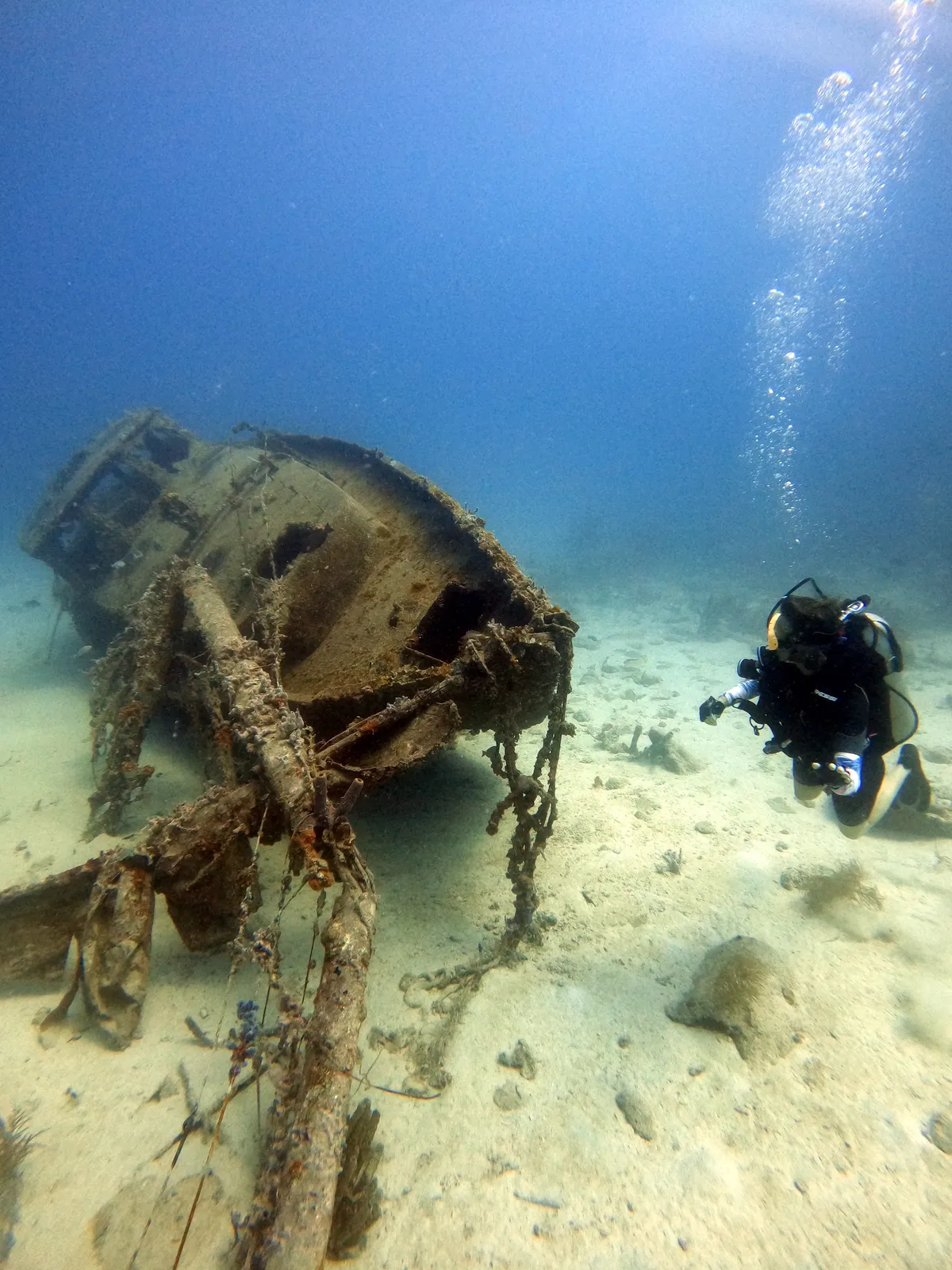
This is the dive everyone remembers. A hull lying in the sand, already taken over by coral and turned into a fish house. You swim round the outside calmly and, depending on your level and conditions, the instructor decides how far in you go. Booked separately.
Subject to level and conditions
6If you want more
PADI courses right here
You can get your Open Water without leaving the archipelago, and also Advanced, Rescue Diver or a Reactivate if it has been years. They take several days, so plan them with your stay: tell us which course you want and we build the calendar with the nights needed.
Open Water · Advanced · Rescue · Reactivate
Current prices
What diving here costs
Beginners · no certification
Per person
Discover scuba · 1 dive45 to 60 minutes, guided throughout, gear and video included
€200
Discover scuba · 2 divesSame day or on different days, depending on the sea
€300
Certified divers
Per person
1 diveWith a valid certification. Gear included
€180
2 divesThe most requested option for those who already dive
€250
Night diveWith torches. Subject to conditions and prior assessment
€200
Distant sites · 2 divesSites further out in the archipelago, with more boat time
€280
PADI courses
Per person
Open Water DiverThe entry certification, valid worldwide
€1.221
AdvancedThe next step, with specialty dives
€981
Rescue DiverTo learn how to handle problems and look after others
€689
ReactivateIf it has been years and you want to get back up to speed
€261
The price varies with the area and the cays chosen. It does not include the boat transfer to the dive site or the National Park fee. Every dive is guided by a certified instructor and is subject to sea conditions and a prior assessment.
Important for your health:international medical safety rules say you should not fly for 12 to 18 hours after a single dive, and up to 24 hours is recommended. Plan your diving so it does not fall on your departure day: we want you home safe, sound and happy.
FrancisquíShallow and very clear: this is usually where discover dives happen.
NordisquíCoral walls and shoals; a good site for certified divers.
NoronquíSea-fan gardens and sandy clearings where rays settle.
Boca de CoteA more distant area with more boat time: part of the distant-site dives.
El naufragioThe sunken hull, now taken over by coral. Booked separately.
Cayo de AguaOne of the loveliest spots in the park; combined with the day charter.
The exact area is decided on the day: the sea, the wind and the group’s level decide. The instructor picks the site with the best visibility where everyone will be comfortable.
Real photos
What you see down there
And this is what it really looks like
Book
Diving in Los Roques
Tell us whether you are certified or it is your first time, how many of you there are and which days you are on the island. We confirm time and area according to the sea that day, and we remind you about the flight rule so it does not catch you out.